Do you need to monitor your lung function regularly but find it difficult to keep track of every reading? A spirometer can give you important information about how your lungs are working, but what happens after you take the reading? Do you write it down, try to remember it, or simply wait until your next appointment to discuss it?
A spirometer app for patient monitoring can make that process much easier. When a spirometer connects with an app, you can record your spirometry readings, follow changes in your lung function, review your results, and share relevant information with your healthcare provider.
But is having a spirometer app really useful for home monitoring? Let’s look at how connected spirometry can help you measure, track, and manage your lung health over time.
Why Is Regular Lung Function Tracking Important?
Regular lung function tracking helps you understand how your breathing is changing over time. It gives you more than a single reading from one lung function test and can help you notice changes that may happen between appointments.
But what can regular tracking actually help you understand? It can help you understand:
-
Whether your lung function is staying stable:
Repeated spirometry readings let you compare your lung function measurements over different days or weeks. You can see whether your readings are generally staying within your usual pattern or starting to change.
-
Whether changes are happening gradually:
A single spirometry test may not show a change that develops slowly. Looking at your readings over time can make gradual changes easier to spot and discuss with your healthcare provider.
-
How your symptoms relate to your readings:
You may notice more coughing, breathlessness, or other respiratory symptoms on certain days. Having lung function readings from the same period gives you more information to discuss with your doctor.
-
What happens between appointments:
Do you think your lung health will stay the same once you leave the clinic? No! It is continuously improving or worsening depending on stressors. Regular home spirometry can help you collect information between visits to see if your health is worsening.
That does not mean every change in a reading points to a problem. Your health can still improve, and improvements may need changes in medication. This is why spirometry results need to be interpreted in context, along with symptoms, medical history, treatment, and proper test technique.
The goal is simple. Regular tracking gives you a clearer record of your respiratory function and helps your healthcare provider understand what has been happening between visits.
How Does a Digital Spirometer With App Support Home Monitoring?
Regular monitoring becomes much more practical when you can measure your lung function at home. A digital spirometer with an app lets you take spirometry readings outside the clinic and keep those results organised for ongoing monitoring.
You no longer have only occasional measurements to look back on. Instead, a digital spirometer app allows you to build a record of your lung function that can support conversations with your healthcare provider.
So, how does a digital spirometer with an app make home monitoring easier? It brings several parts of the process together, like:
-
Measuring Your Lung Function Without Waiting for Your Next Appointment
Your lung function can change between two clinic visits. So, why wait until your next appointment to take another measurement?
A portable spirometer with an app can allow you to perform a spirometry test at home when regular home monitoring is part of your care plan. You can measure parameters such as FEV1, FVC, FEV1/FVC, and PEF and keep those lung function measurements available for tracking.
That means your understanding of your respiratory function does not have to depend only on occasional clinic visits.
-
Keeping Every Reading in One Place
Taking regular readings is useful only if you can keep track of them. That's exactly what a spirometer with an app delivers.
You don’t have to worry about writing down each result or trying to remember what your previous reading was. The spirometer app can keep track of all your spirometry results and keep them together.
With it, you can return to your previous readings and see how your lung function has changed over time. That makes regular monitoring much easier to manage and gives you a clearer record of your respiratory health.
-
Turning Individual Readings Into a Picture of Your Lung Health
Keeping your readings together gives you another advantage! It allows you to actually compare them.
A spirometry monitoring app can help you follow your readings over time and monitor trends in your lung function. You may find that your measurements are relatively stable, or you may notice a change that you want to discuss with your doctor.
That is where regular home monitoring becomes more useful than collecting isolated numbers. You are able to look at your readings as part of a longer record of your lung health.
-
Sharing Your Lung Function Information With Your Doctor
Now, what do you do with all that information? Keeping a record is helpful, but your healthcare provider also needs access to relevant information to understand what has been happening between appointments. alveofit's spirometer app allows patients to view their reports and share detailed information with their provider.
Your doctor can then consider those spirometry results alongside your symptoms, treatment, medical history, and other clinical information.
So, a connected spirometer does more than help you perform spirometry at home. It helps connect home measurements with the wider process of lung health care.
How Does alveofit Connect Spirometry With App-Based Monitoring?
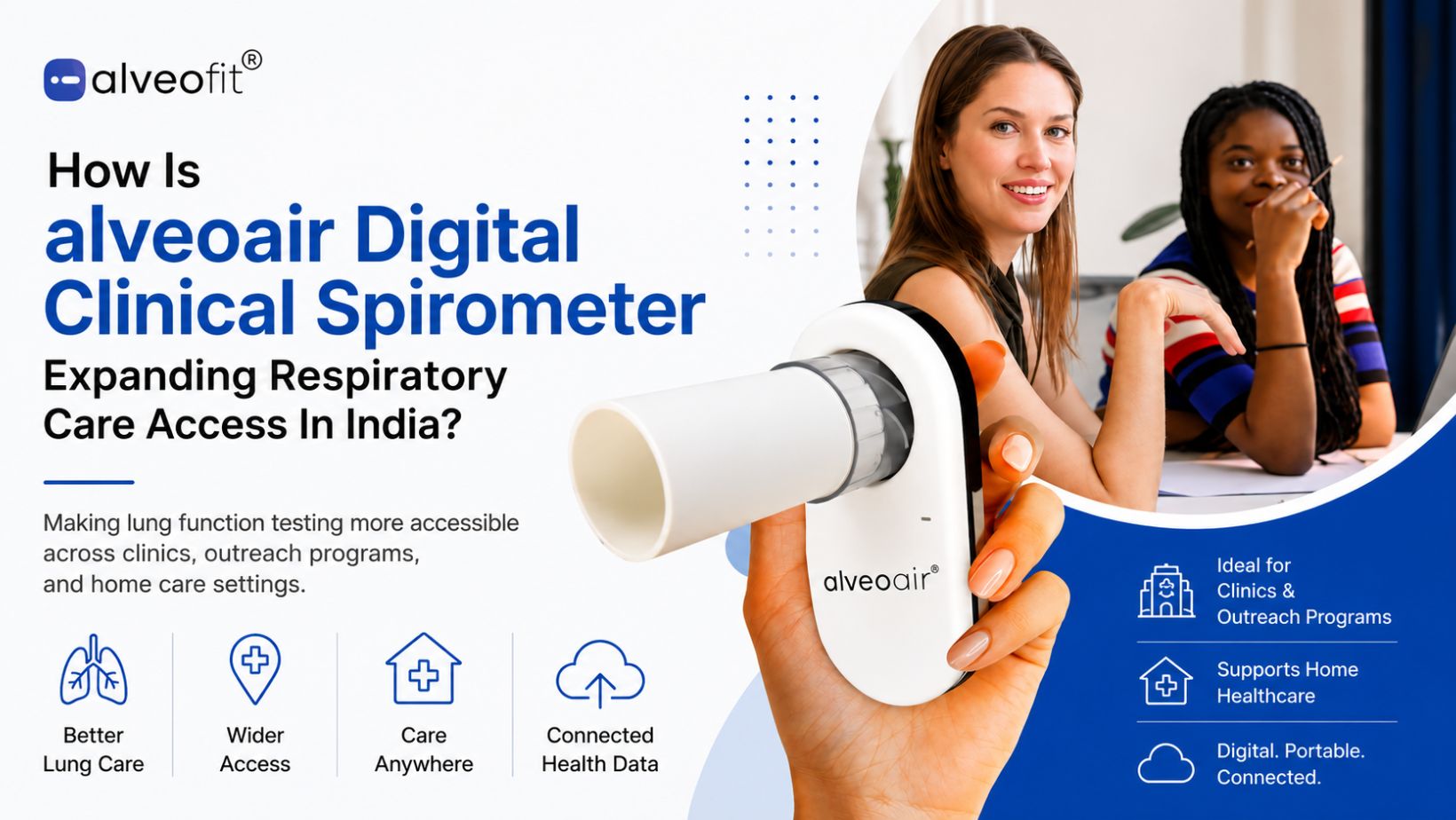
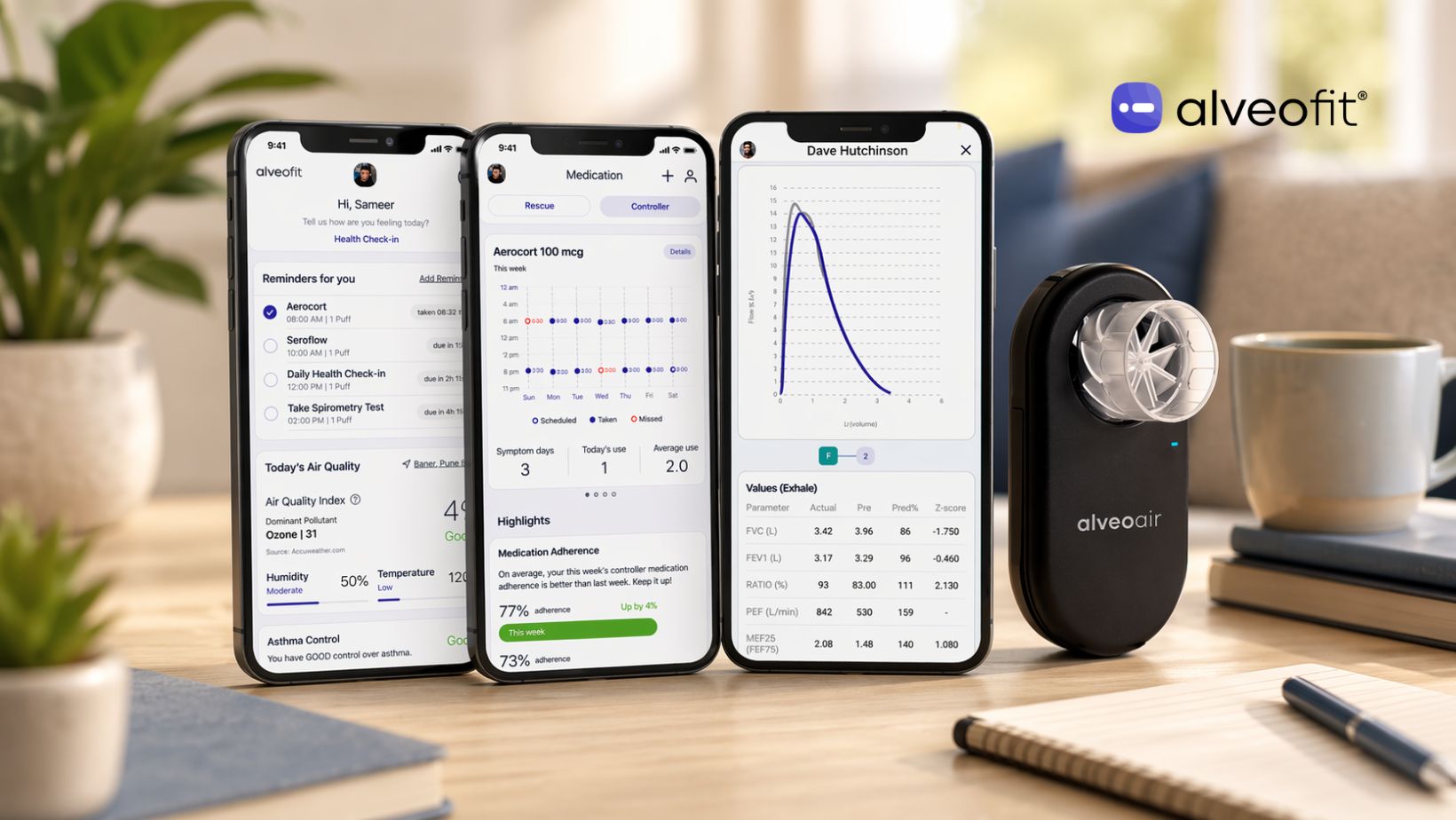
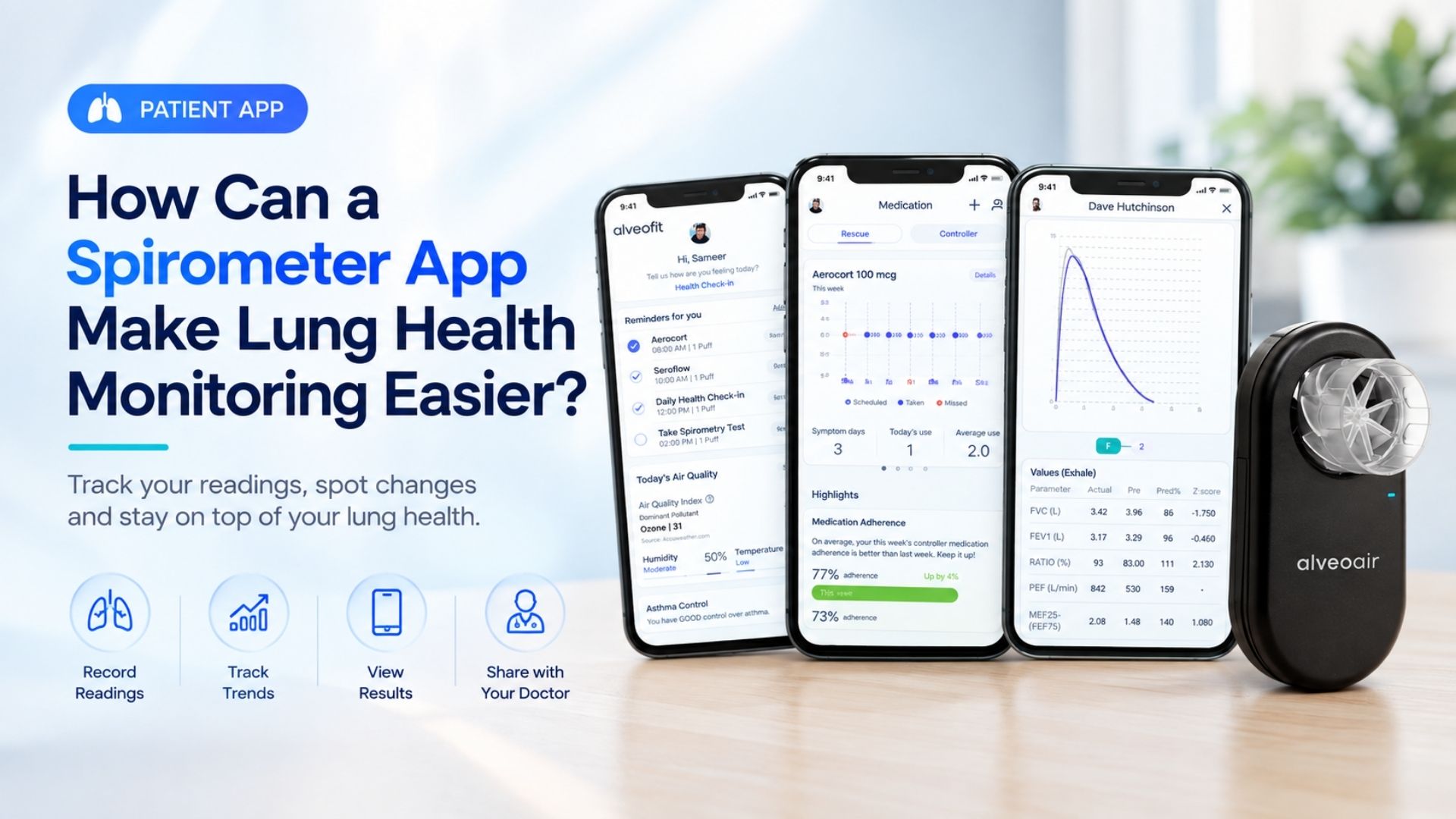
alveofit connects the alveoair® digital spirometer with the alveofit® application to make lung function monitoring more connected and easier to manage at home. You can use the spirometer to measure your lung function, use the app to track your spirometry results, review your reports, and share relevant information with your healthcare provider.
But how does this connected spirometry monitoring app support your lung health? It does so by offering various features like:
Measure Your Lung Function With alveoAir®
The alveoair digital spirometer is designed for home spirometry and can help patients measure their lung function outside the clinic. alveofit positions alveoAir® for people managing respiratory conditions such as asthma, COPD, cystic fibrosis, and ILD.
The device provides the measurements that form the foundation of your lung health record. Without regular measurements, there is nothing for an app to track or compare.
Use the alveofit Patient App to Track Your Results
The alveofit patient application brings your spirometry information together so you can track your results and follow your lung function over time. The app also provides guidance during testing and feedback on test performance.
That means this spirometer app for patient monitoring is not simply storing numbers. It becomes part of the process of measuring and monitoring your lung health.
Review and Share Your Reports With Your Provider
Your lung function information becomes more useful when it can be discussed with the person responsible for your care. alveofit allows patients to view detailed reports and share them with their healthcare provider. Your doctor can then review the information alongside your symptoms, treatment, medical history, and other clinical findings.
This keeps home monitoring connected to professional care rather than leaving you to interpret your readings on your own.
Built Around Quality Spirometry
Regular lung health monitoring is only useful when the measurements themselves are collected appropriately. That is why spirometry quality, patient technique, test performance, acceptability, repeatability, and quality control matter. alveofit states that its spirometry solutions support ATS/ERS standards, which provide recommendations for performing high-quality spirometry.
Is a Connected Spirometry Setup Right for You?
Are you managing asthma, COPD, or another chronic respiratory condition and need to keep track of your lung function between appointments? A connected spirometer app for patient monitoring may be useful if you want to:
- Monitor your lung function at home instead of relying only on occasional clinic measurements.
- Keep your spirometry readings organised so you can follow changes over time.
- Track your results through an app instead of maintaining separate records.
- Share your reports with your healthcare provider to support conversations about your respiratory health.
You do not need another place to collect numbers. You need a way to measure, track, review, and share those readings as part of your ongoing lung health care.
Explore alveofit and discover a connected way to monitor your lung function from home.
FAQs
1. How often should I use a spirometer to monitor my lung function?
The right frequency depends on your respiratory condition and your healthcare provider’s advice. Follow the monitoring schedule recommended by your doctor rather than assuming that more frequent testing is always better.
2. Can I use a spirometer app without my doctor?
You can use a spirometer app to record and track your readings, but your healthcare provider should guide you on how and when to monitor your lung function. Your results should also be interpreted alongside your symptoms and other clinical information.
3. Are home spirometry readings as reliable as clinic readings?
Home spirometry can provide useful information between appointments, but it should not automatically be treated as equivalent to supervised clinical spirometry. Proper patient technique, test quality, and appropriate clinical interpretation still matter.
4. What should I do if my spirometry readings suddenly change?
Do not interpret a sudden change in your reading on its own or change your medication without medical advice. Follow your care plan and speak with your healthcare provider if your readings change or your respiratory symptoms become worse.
5. What should I look for in a spirometer app?
Look for a spirometry monitoring app that can help you record and track readings, review results, and share relevant reports with your healthcare provider. Test guidance, performance feedback, and compatibility with a reliable digital spirometer can also make home monitoring more useful.