Pulmonology clinics today are under constant pressure. Patient volumes are increasing. Case complexity is rising. Time, space, and staff attention are limited. In this environment, adding a new diagnostic tool is not just a clinical decision. It is an operational one.
This is exactly why the conversation around an FOT testing device in India has shifted. Clinics are no longer asking whether oscillometry is useful. They are asking whether a device can fit seamlessly into daily practice without slowing them down.
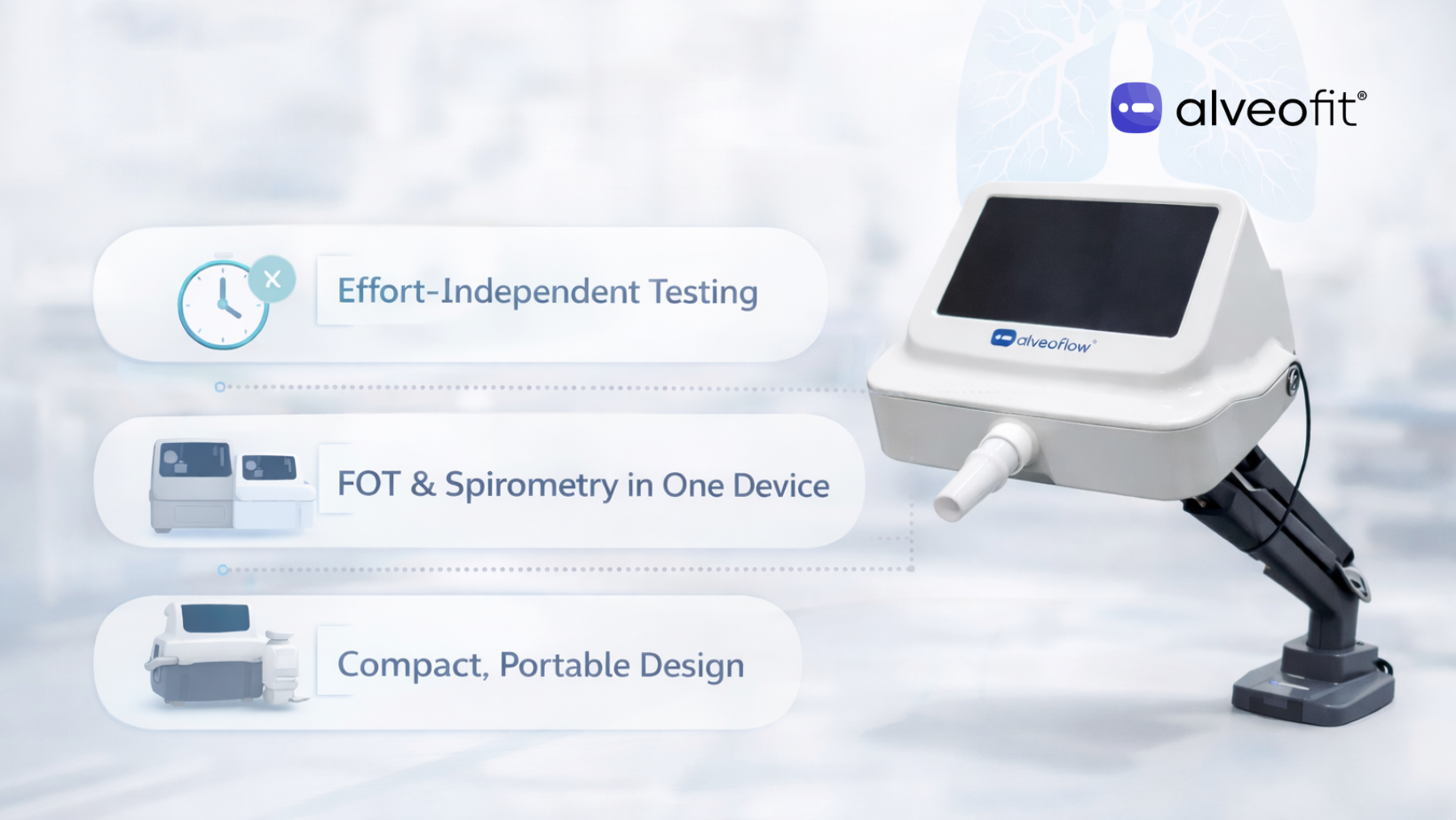
A clinic-friendly FOT device does not impress clinicians through specifications alone. It earns its place by making everyday work easier, faster, and more reliable. Here are three features that truly define whether an FOT testing device belongs in a modern clinic.
1.Fast, Effort-Independent Testing That Reduces Test Failure
Time is one of the most limited resources in any clinic. Yet a significant portion of that time is often lost to repeated instructions, coaching, and incomplete tests. This is especially true when patients struggle with effort-dependent manoeuvres.
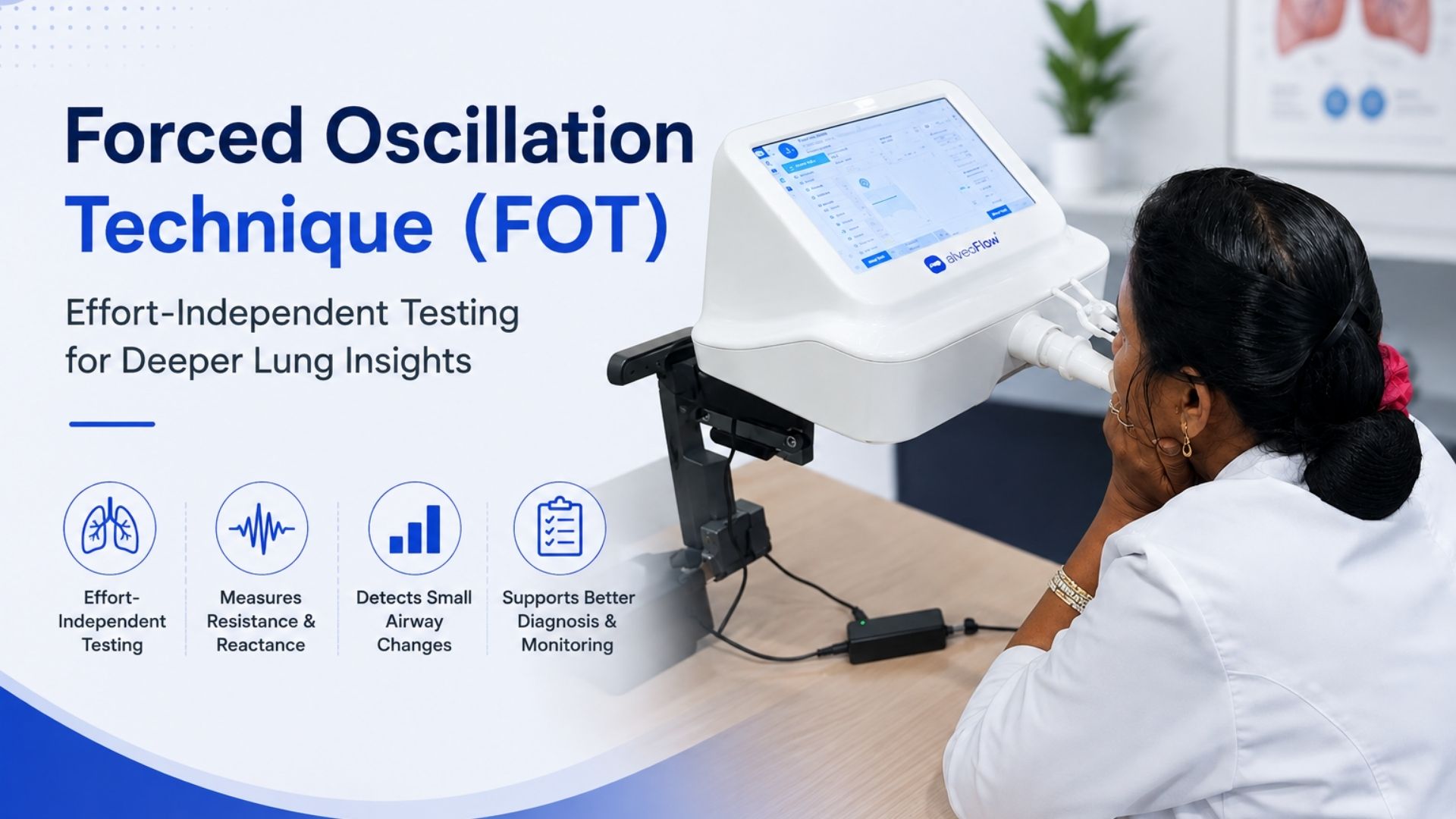
A clinic-ready FOT testing device in India is designed to remove this friction by keeping testing simple, quick, and reliable. Unlike spirometry, FOT works during normal breathing.
- There is no forceful exhalation.
- No repeated coaching.
- No dependence on stamina, coordination, or technique.
This alone changes how smoothly testing fits into everyday clinical flow. Effort-independent testing makes a clear difference for:
- Children who find forced breathing difficult
- Older adults who fatigue quickly
- Patients recovering from infections
- Individuals with severe breathlessness or anxiety
When testing becomes easier to perform, more patients complete it successfully. When completion rates improve, clinicians can rely on the data with greater confidence. Reliable data leads to clearer decisions and fewer repeat visits.
Equally important is how the FOT testing device in India supports staff during testing. Features such as automated calibration and guided workflows reduce operator variability and limit dependency on individual skill levels.
For clinics, this translates into:
- Fewer failed or repeated tests
- Consistent results across staff members
- Faster patient throughput during busy OPD hours
In high-volume clinical settings, this efficiency is not a convenience. It is what allows advanced diagnostics like an FOT testing device in India to function smoothly without slowing the clinic down.
2. Integrated FOT and Spirometry in a Single System
One of the biggest challenges clinics face when adopting new diagnostic tools is fragmentation. When spirometry and oscillometry exist as separate devices, the strain is felt across the clinic.
- Workflows become heavier and less efficient
- Valuable clinical space gets crowded with multiple systems
- Diagnostic data remains scattered across platforms
- Staff training becomes repetitive and time-consuming
A clinic-friendly FOT testing device in India addresses this by bringing FOT and spirometry into a single, unified system. This integration matters far more in practice than it does on paper. It allows clinicians to shift seamlessly between effort-dependent and effort-independent testing without changing equipment or interrupting patient flow.
Together, the two tests complement each other clearly:
- Spirometry captures volumes and forced flow measurements.
- FOT reveals airway resistance and lung mechanics during quiet breathing.
- Combined, they deliver a layered and more complete view of lung function.
To put it simply, one system answers multiple clinical questions in one sitting.
For clinics, this integration means:
- Fewer devices to manage and maintain
- Smoother transitions between tests
- Centralised data instead of scattered reports
- A more streamlined diagnostic workflow
For patients, it means:
- Less confusion during testing
- Shorter, smoother appointments
- Fewer repeated instructions or failed attempts
For clinicians, it brings clarity without complexity. When combined, the data from spirometers and the FOT testing device in India is richer, yet the process feels simpler.
3. Compact, Portable Design That Fits the Reality of Indian Clinics
Physical space is one of the most practical constraints in Indian healthcare settings. Many clinics operate with limited diagnostic rooms. Equipment often needs to be shared between OPD areas, consultation cabins, and wards. Large, fixed diagnostic machines usually struggle in such environments because they demand permanent space and dedicated setups.
A clinic-ready FOT testing device in India is designed with this reality in mind. Its value is not only in what it measures, but in how easily it fits into the clinic’s existing layout and daily movement. A FOT testing device in India with a compact and portable design supports clinics in several important ways:
- Fits into limited diagnostic spaces: Medical equipment with a small footprint can be placed within crowded rooms without forcing clinics to rearrange furniture, remove other devices, or compromise workflow. This makes adoption practical rather than disruptive.
- Moves with the patient, not the other way around: Instead of shifting patients between departments, a portable device can be taken to OPD rooms, wards, or consultation areas. This reduces patient fatigue and avoids delays caused by logistics rather than care.
- Supports shared and flexible use: In clinics where rooms and equipment are shared across doctors or time slots, portability allows the same device to be used across multiple settings without duplication or downtime.
- Enables bedside and outreach assessments: Lightweight systems allow clinics to extend testing beyond fixed diagnostic rooms. Bedside assessments, follow-ups in wards, or outreach programs become feasible without investing in multiple machines.
This kind of design also supports long-term growth. Clinics serving both urban and semi-urban populations can expand services gradually. They can conduct bedside testing when needed and support outreach programs without redesigning infrastructure or investing in multiple systems.
When a FOT testing device in India fits naturally into daily clinic movement, it gets used more often and more confidently. Tests are not postponed due to space, setup, or logistics. Clinicians do not have to “plan around” the device. Instead, it becomes part of routine assessment. That consistency is what turns FOT from an occasional test into a dependable component of everyday respiratory care.
Conclusion
Remember that not every oscillometry system is designed with clinics in mind. Hence, it is crucial for you to look beyond parameters and focus on practice-level impact when evaluating an FOT testing device in India.
So, try to ask these simple questions before investing in one:
- Does this device reduce or add steps to my workflow?
- Will my staff find it easy to use every day?
- Can it serve my patient population without frequent test failures?
- Does it fit into my physical space without compromise?
Devices that answer these questions well are the ones that truly support clinical care. Solutions like alveoflow from alveofit are built around this philosophy. They bring FOT and spirometry together in a single system, removing the need for fragmented testing workflows. Visit our website to understand why clinics around India are choosing alveofit today.